Treatment of Systemic Amyloidosis: Primary Aim, Strategy, and Patient Management
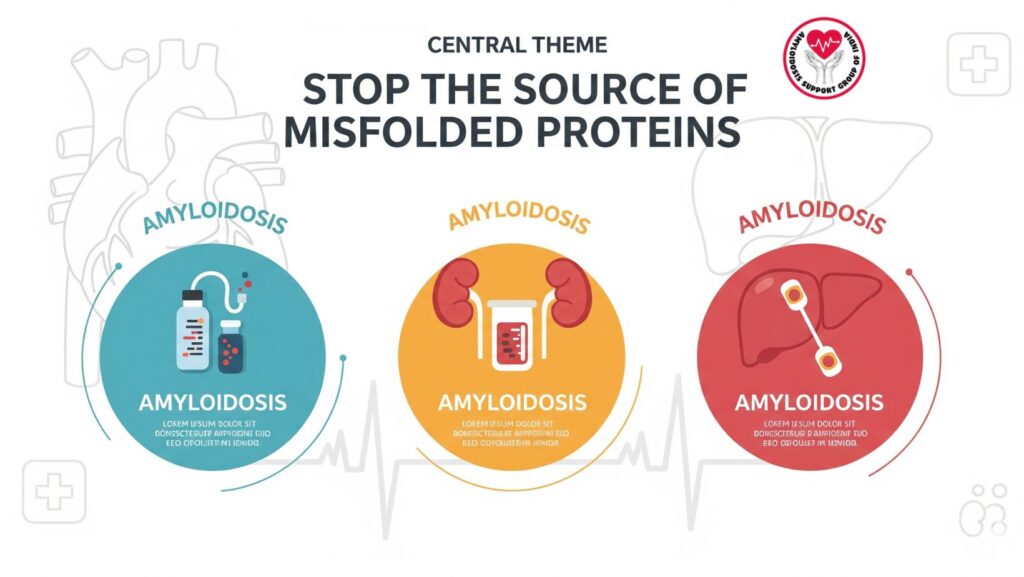
Table of Contents
1. Introduction
Systemic amyloidosis is a category of uncommon yet dangerous protein misfolding conditions in which amyloid fibrils deposit in organs and damage their function. Despite the frequent progressive and life-threatening nature of the disease, contemporary medicine has dramatically enhanced prognosis with type-specific, targeted therapies.
The primary treatment objective of systemic amyloidosis is to find and halt the cause of misfolded proteins, preventing ongoing amyloid deposition, maintaining organ function, and enhancing survival.
2. Clarifying the Treatment Objective
While in most diseases treatment revolves around managing symptoms, in systemic amyloidosis therapy needs to tackle the root cause of amyloid formation.
- In AL amyloidosis, problematic plasma cells secrete poisonous light chains → treatment has to inhibit these plasma cells.
- In AA amyloidosis, persistent inflammation generates surplus serum amyloid A → treatment has to check the inflammatory disease.
- In ATTR amyloidosis, aberrant transthyretin proteins aggregate to form amyloid → treatment has to stabilize or silence TTR expression.
Hence, the key objective remains the same in all cases: Cut or limit the supply of amyloidogenic proteins.
3. Treatment by Type of Amyloidosis
3.1 AL (Light-Chain) Amyloidosis
It is the most frequent systemic form. It occurs as a result of a plasma cell disorder that is akin to multiple myeloma.
Principal Treatment Methods:
- Chemotherapy regimens (bortezomib, cyclophosphamide, dexamethasone)
- Autologous stem cell transplantation in suitable patients
- Monoclonal antibodies (e.g., daratumumab) against plasma cells
- Supportive care for cardiac, renal, and hepatic involvement
The aim is to attain hematologic remission, i.e., no more production of abnormal light chains.
3.2 AA (Secondary) Amyloidosis
This is secondary to chronic inflammatory disorders (e.g., rheumatoid arthritis, tuberculosis, chronic infections).
Principal Treatment Measures:
- Intensive treatment of the primary disease (anti-TNF or IL-6 antagonists in RA, antibiotics in infections)
- Colchicine in familial Mediterranean fever to avoid amyloid deposition
- Biologic medications to quell inflammation and decrease serum amyloid A concentrations
The aim is to maintain SAA levels low, inhibiting amyloid progression.
3.3 ATTR (Transthyretin) Amyloidosis
This is due to genetic mutations (hereditary ATTR) or age-related deposition (wild-type ATTR).
Main Treatment Strategies:
- TTR stabilizers: Tafamidis inhibits misfolding of transthyretin.
- Gene-silencing therapies: Patisiran, inotersen decrease TTR production at the RNA level.
- Liver transplantation: In hereditary ATTR, replacing the liver stops mutant TTR production.
- Heart transplantation: In end-stage cardiac involvement.
The primary objective here is to stabilize or silence TTR in order to prevent amyloid accumulation.
4. Supportive Care Measures
Although disease-modifying treatment is paramount, patients must also receive supportive management to enhance quality of life:
- Cardiac care: Diuretics in heart failure, pacemakers for arrhythmias
- Renal care: Dialysis in severe kidney disease, restriction of dietary protein
- Liver care: Ascites management, nutritional supplementation
- Neuropathy care: Pain relief, medication for autonomic dysfunction
- Care in general: Physical therapy, psychosocial support, palliative care
5. Monitoring Treatment Response
Assessing the effectiveness of treatment is paramount.
- Hematologic markers: Free light chains, immunofixation in AL amyloidosis
- Function tests in organs: Cardiac biomarkers (NT-proBNP, troponin), kidney function (creatinine, proteinuria), liver function (bilirubin, ALP)
- Imaging: Echocardiography, cardiac MRI, liver ultrasound
- Reassessing biopsy (rarely necessary): For confirmation of regression of amyloid deposits
Definition of Success:
Halting amyloid formation and stabilizing or enhancing organ function
6. Prognosis and Significance of Early Treatment
Unless treated, systemic amyloidosis is usually followed by multi-organ failure and death. With current therapies:
- AL amyloidosis: Survival may reach >10 years with complete hematologic response.
- AA amyloidosis: Patients can live decades if the associated underlying inflammation is effectively controlled.
- ATTR amyloidosis: Tafamidis and RNA-based therapies severely slow disease progression.
Early diagnosis is key since once organs are badly damaged, cure is possible even if amyloidogenesis is halted.
7. Future Directions in Treatment
The future of systemic amyloidosis treatment is bright:
- Next-generation monoclonal antibodies for removal of existing amyloid deposits
- CRISPR-based gene editing for hereditary ATTR amyloidosis
- New small-molecule stabilizers for TTR and other amyloidogenic proteins
- Advanced imaging to detect earlier before organ damage happens
These treatments change the aim from merely stopping production to possibly eradicating current amyloid deposits.
8. Key Takeaways
- The primary treatment goal in systemic amyloidosis is type-specific suppression of misfolded protein production.
- Supportive care is critical for the management of complications.
- Early diagnosis significantly enhances survival and quality of life.
- Research is progressing toward therapies that could reverse current organ damage.
9. Conclusion
Systemic amyloidosis is a ruinous illness, but new therapies have revolutionized its prognosis. By addressing the underlying cause of amyloidogenesis, patients can be successfully treated, prevent additional organ damage, and enjoy increased years of health. Clinicians and patients alike need to be attentive for prodromal manifestations, as early, type-specific therapy is the key to enhanced survival.