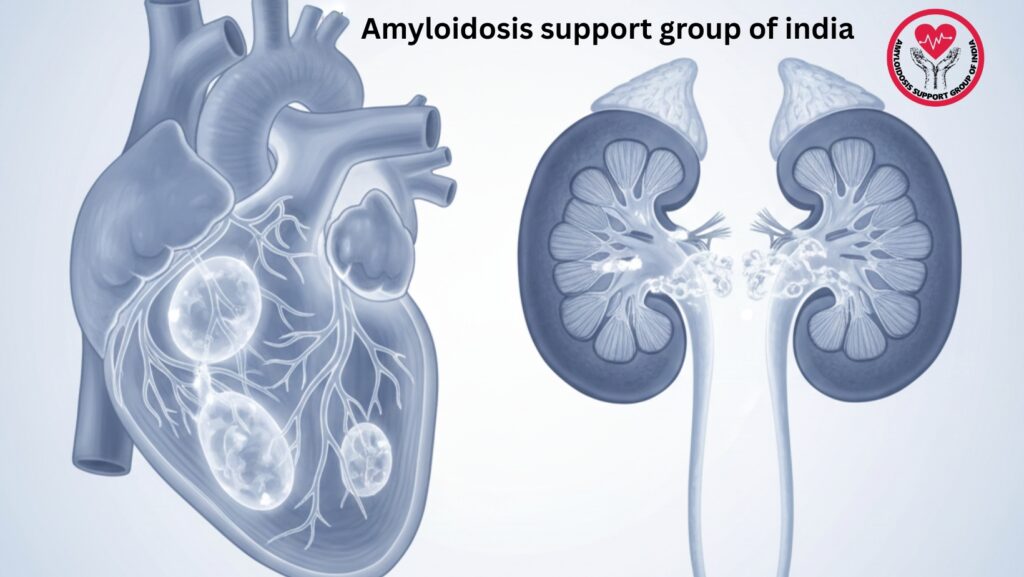
Deep Organ Response in Amyloidosis: Meaning, Criteria, and Why It Matters
(Perfect for amyloidosissupport.in)
Table of Contents
Introduction
In amyloidosis, treatment success isn’t just about how much the light chains (or amyloid proteins) drop in the blood. The real goal is healing the organs that amyloid has harmed, particularly the heart, kidneys, liver, nerves, and gastrointestinal system. This healing is called a deep organ response.
This idea is crucial for patients because a deep organ response relates directly to:
- Better quality of life
- Improved organ function
- Longer survival
- Lower risk of complications
- Better long-term outcomes
In this article, we clarify what deep organ response means, how doctors measure it, and how patients can monitor their improvement.
What Is a “Deep Organ Response”?
A deep organ response means that the organs affected by amyloid (like the heart or kidneys) start functioning significantly better after treatment.
In simple terms:
“Your organs begin to heal after successful amyloidosis treatment.”
It shows true recovery, not just reduced protein levels in the blood.
Even if disease markers (like light chains) improve early, organ improvement often takes months to years. A deep organ response indicates that this organ healing is strong, measurable, and meaningful.
Why Is Deep Organ Response Important?
Here are the key reasons:
✔ Shows that treatment is working at the organ level
Even if blood markers improve quickly, the organs may still be damaged. A deep organ response confirms real healing.
✔ Predicts better survival
Studies indicate that patients who achieve deep cardiac or renal response live significantly longer.
✔ Improves quality of life
Patients report better breathing, reduced swelling, improved stamina, and better kidney output.
✔ Confirms stability of the disease
When organs recover, it usually means amyloid deposits have stopped forming, and may even be breaking down.
How Doctors Measure Deep Organ Response
The definition depends on the organ affected. Below are the most common response criteria for major organs:
1. Deep Organ Response in the Heart (Cardiac Response)
The heart is often the most affected organ, especially in AL or ATTR amyloidosis.
How heart response is measured:
✔ NT-proBNP Reduction
A reduction of >30% AND >300 pg/mL is seen as a strong cardiac response.
This means heart strain is decreasing.
✔ Improvement in Heart Thickness or Mass
Echocardiogram or cardiac MRI may show a reduction in wall thickness.
✔ Improved Ejection Fraction (EF)
The heart pumps blood more effectively.
✔ Reduced Symptoms
- Less shortness of breath
- Better exercise tolerance
- Reduced swelling in legs
- Fewer heart failure episodes
A deep cardiac response shows that the heart is recovering and functioning better.
2. Deep Organ Response in the Kidneys (Renal Response)
Kidneys are often affected in amyloidosis due to protein leakage.
How kidney response is measured:
✔ 50% or more reduction in proteinuria
(example: from 6 g/day to 2–3 g/day)
✔ Stable or improved eGFR
This means kidneys are filtering better.
✔ Reduced swelling (edema)
As kidney function improves, water retention decreases.
✔ Better creatinine readings
Lower creatinine means better kidney filtration.
A deep renal response is one of the strongest signs of improved long-term survival.
3. Deep Organ Response in the Liver (Hepatic Response)
Liver enlargement and abnormal liver tests appear in some types of amyloidosis.
Hepatic response includes:
✔ 50% reduction in alkaline phosphatase (ALP)
✔ Decreased liver size
✔ Improved bilirubin levels
When liver parameters normalize, it shows the organ is healing.
4. Peripheral Nerve Response (Neuropathy)
Amyloid can affect peripheral and autonomic nerves.
Nerve response includes:
✔ Improved numbness/tingling
✔ Better walking strength
✔ Reduced pain
✔ Improved digestive and sweating function (autonomic)
Nerve recovery takes time but can happen after a good treatment response.
5. Gastrointestinal (GI) Response
Patients may experience GI symptoms like diarrhea, constipation, and weight loss.
Improvement indicates:
✔ Better nutrient absorption
✔ Stable weight
✔ Reduced diarrhea or constipation
✔ Better appetite
How Soon Does Deep Organ Response Occur?
Organ healing takes time. Typical timeline:
⏳ 1–3 months
- Hematologic response (light chains reduce)
- Symptoms begin to stabilize
⏳ 6–12 months
- Early organ changes begin
⏳ 12–24 months
- Significant organ improvement observed
- Cardiac and renal parameters improve
⏳ 2–5 years
- Deep organ response in many patients
- Continued structural recovery
Organ recovery may be slow, but it is very meaningful.
How Treatment Leads to Deep Organ Response
Treatment does not remove amyloid immediately.
Instead:
1️⃣ Treatment stops new amyloid from forming
(chemotherapy, daratumumab, tafamidis, etc.)
2️⃣ The body slowly clears existing amyloid deposits
This can take months to years.
3️⃣ Organs begin to regain function
This leads to a deep organ response.
Signs That You Are Experiencing a Deep Organ Response
Patients often notice:
✔ Better breathing
✔ Increased energy
✔ Less swelling
✔ Improved urine output
✔ Lower NT-proBNP
✔ Lower protein in urine
✔ Better appetite
✔ More stamina
✔ Weight stabilization
These signs indicate real organ healing.
Can Deep Organ Response Reverse Organ Damage?
Yes, in many cases:
Heart:
Wall thickness may decrease, and symptoms can improve.
Kidneys:
Protein leakage may reduce greatly.
Liver:
Size and enzyme levels may return to normal.
Nerves:
Slow but steady improvement is possible.
However, full reversal relies on:
- Stage at diagnosis
- Speed of treatment
- Overall health
- Type of amyloidosis (AL, ATTR, AA)
Early diagnosis equals a better chance of deep organ response.
What If Organ Response Is Slow?
Don’t worry.
✔ Organ recovery is usually much slower than hematologic response.
Blood markers may improve in weeks, but organs take months or years.
✔ Doctors assess organ response over time.
One test cannot define recovery.
✔ Keep following treatment and supportive care.
A slow response does not mean treatment failed.
How Patients Can Support Organ Recovery
1. Follow the treatment plan closely
Never skip or delay therapy.
2. Monitor your numbers
- NT-proBNP
- Creatinine
- eGFR
- Proteinuria
- Liver enzymes
3. Manage salt and water intake
This is crucial for cardiac and renal patients.
4. Control blood pressure and sugar
High blood pressure slows kidney recovery.
5. Stay active within limits
Light walking improves organ function.
6. Avoid NSAIDs
They can harm kidneys.
7. Regular follow-ups
Essential for monitoring organ healing.
Deep Organ Response vs. Hematologic Response
| Hematologic Response | Deep Organ Response |
|---|---|
| Reduction in light chains | Improvement in organ function |
| Occurs within weeks/months | Occurs in months/years |
| Stops new amyloid formation | Removes old amyloid and heals damage |
| Lab-based | Symptom and organ-based |
Both responses are essential, but deep organ response determines long-term outcome.
Conclusion
A deep organ response is one of the strongest signs that amyloidosis treatment is working. It indicates true healing of vital organs like the heart, kidneys, and liver. While organ recovery is slow, it is meaningful and leads to significantly better survival and quality of life.
Understanding these responses helps patients stay informed, hopeful, and motivated throughout their treatment journey.