Case Report: Liver Transplantation Considered but Postponed Secondary to Multi-Organ Involvement in a 61-Year-Old Amyloidosis Patient .
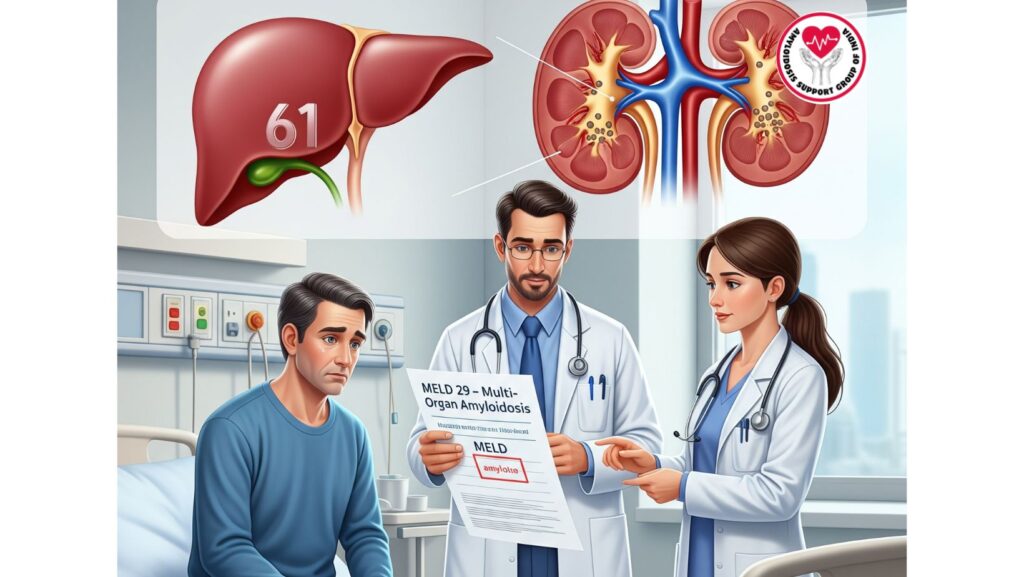
Table of Contents
Introduction
Liver transplantation has been an accepted therapeutic modality for end-stage liver disease patients for many years. In systemic illnesses like amyloidosis, the issue of transplantation is multifaceted and needs to be evaluated carefully on the basis of multi-organ involvement. The current case report describes a 61-year-old patient with amyloidosis for whom liver transplantation was under consideration but eventually not undertaken because of systemic organ involvement, highlighting the dilemma for clinicians in weighing risks and benefits.
Background of Amyloidosis and Transplantation
Amyloidosis is a series of disorders with extracellular deposition in tissues and organs of misfolded amyloid fibrils. Based on the amyloidosis type—AL (primary), AA (secondary), or hereditary forms—the clinical presentation and organ involvement are very different.
- AL Amyloidosis tends to involve the heart, kidneys, liver, and gastrointestinal tract.
- Liver involvement is usually presented as hepatomegaly, cholestatic elevation of liver enzymes, and in very severe instances, liver failure.
- Transplant decisions rest on the status of amyloid as localized or systemic.
Although liver transplantation can be offered, systemic amyloid with heart or renal involvement can significantly alter the survival rates after transplant.
Case Presentation
A 61-year-old male patient with systemic manifestations of amyloidosis, involving hepatic impairment, nephrotic-range proteinuria, and cardiac manifestation. His course of disease is depicted below:
- On initial presentation, there was normal INR and creatinine.
- With time, he had nephrotic-range proteinuria and ascites.
- Investigations provided evidence of portal hypertension (SAAG > 1.1) but no infection or malignancy in ascitic fluid.
- Transthoracic echocardiogram revealed left ventricular hypertrophy suspicious for an infiltrative process.
- Sigmoid colon biopsy established AL amyloidosis by mass spectroscopy.
- Upon readmission, the patient had severe hepatic dysfunction with a total bilirubin of 21.6 mg/dL, deranged AP, AST, and ALT.
- A transjugular liver biopsy established hepatic amyloidosis without inflammation, fibrosis, or malignancy.
- The MELD score of the patient rose from 14 to 29, indicating worsening liver function.
- Renal function also worsened during hospitalization.
Liver Transplant Consideration
With the sudden decline in liver function, liver transplant was considered as a life-saving procedure. The multisystemic involvement in amyloidosis, however, made such consideration difficult.
Factors Favoring Transplant Consideration:
- Advanced hepatic dysfunction (bilirubin > 20 mg/dL, increasing MELD).
- Lack of substantial inflammation or fibrosis—implying a largely amyloid-mediated process.
- Failure of medical management to stop progression.
Reasons Against Transplantation:
- Multi-organ involvement – renal impairment and cardiac amyloid infiltration.
- Systemic AL amyloidosis, which will continue depositing amyloid despite liver replacement.
- Decreased post-transplant survival by virtue of continued extra-hepatic amyloid load.
Finally, the patient was not listed for transplantation because of the high risk of adverse outcomes.
Clinical Discussion
The case highlights the delicate decision-making process in liver transplantation for amyloidosis.
- In systemic AL amyloidosis, isolated liver transplant is not likely to arrest disease activity, as the dysfunctional plasma cells continue to secrete amyloid proteins.
- Cardiac involvement—as in this patient with LV hypertrophy—significantly compromises survival and is generally a contraindication.
- In very specific situations, combined liver-kidney or liver-heart transplants can be considered, but candidacy is restricted by comorbidities and availability of resources.
Lessons Learned
- Multidisciplinary evaluation is important prior to listing amyloidosis patients for transplant.
- Systemic assessment (cardiac MRI, renal biopsy, bone marrow examination) should determine transplant candidacy.
- New treatments, including plasma cell–targeted therapy (bortezomib, daratumumab) and RNA-silencing therapies, can prolong survival and change the timing of transplant.
Literature Review on Liver Transplantation in Amyloidosis
Based on studies:
- Survival following liver transplantation in AL amyloidosis is restricted unless systemic disease is manageable.
- Hereditary amyloidosis (e.g., ATTR) is improved post-transplant if done early.
- AL amyloidosis with multi-organ involvement tends to have a poor prognosis, mandating case-by-case decisions.
Prognosis and Patient Outcome
It was unfortunate that this patient’s rapidly deteriorating hepatic function, renal failure, and cardiac involvement rendered transplantation non-feasible. His course indicates the aggressive nature of AL amyloidosis with multi-organ impact.
Conclusion
This situation emphasizes the clinical difficulties of liver transplantation in systemic amyloidosis. Although transplant may be an option for solitary hepatic amyloidosis, multiple organ involvement typically makes candidacy ineligible because of unfavorable anticipated results.
The scenario emphasizes the need for early diagnosis, systemic assessment, and inclusion of emerging treatments in the care of amyloidosis patients.
Key Takeaways
- Liver transplant is seldom curative in AL amyloidosis because of systemic disease.
- Amyloid infiltration in the heart and kidneys severely compromises transplant results.
- Multidisciplinary management and new treatments are needed in such complicated cases.