Table of Contents
Introduction
Urinary tract infections (UTIs) are a frequent medical condition that plagues millions of people around the globe. For AL Amyloidosis patients, UTIs present special challenges because of the systemic nature of the disease. AL Amyloidosis is a relatively rare disease in which abnormal protein deposits, referred to as amyloid fibrils, form within organs and tissues. These deposits impair the kidneys, urinary tract, and immune system, making them more susceptible to infection. It is vital to recognize the symptoms of UTIs in AL Amyloidosis patients for early diagnosis, timely treatment, and avoidance of complications.
We will discuss in this article the common symptoms of UTIs among AL Amyloidosis patients, their causes and risk factors, diagnosis, treatments, and prevention. We will also consider special cases of patients who have both AL Amyloidosis and urinary tract infections.
Understanding AL Amyloidosis and Its Impact on the Urinary System
What is AL Amyloidosis?
AL Amyloidosis, or primary amyloidosis, results from abnormal light chains produced by plasma cells of the bone marrow. The abnormal light chains misfold and create amyloid fibrils, which accumulate in tissues and organs of the heart, kidneys, liver, and nervous system. Involvement of the kidneys is of special importance because it can cause proteinuria, nephrotic syndrome, and renal dysfunction, which may impair urine output and predispose to infections such as UTIs.
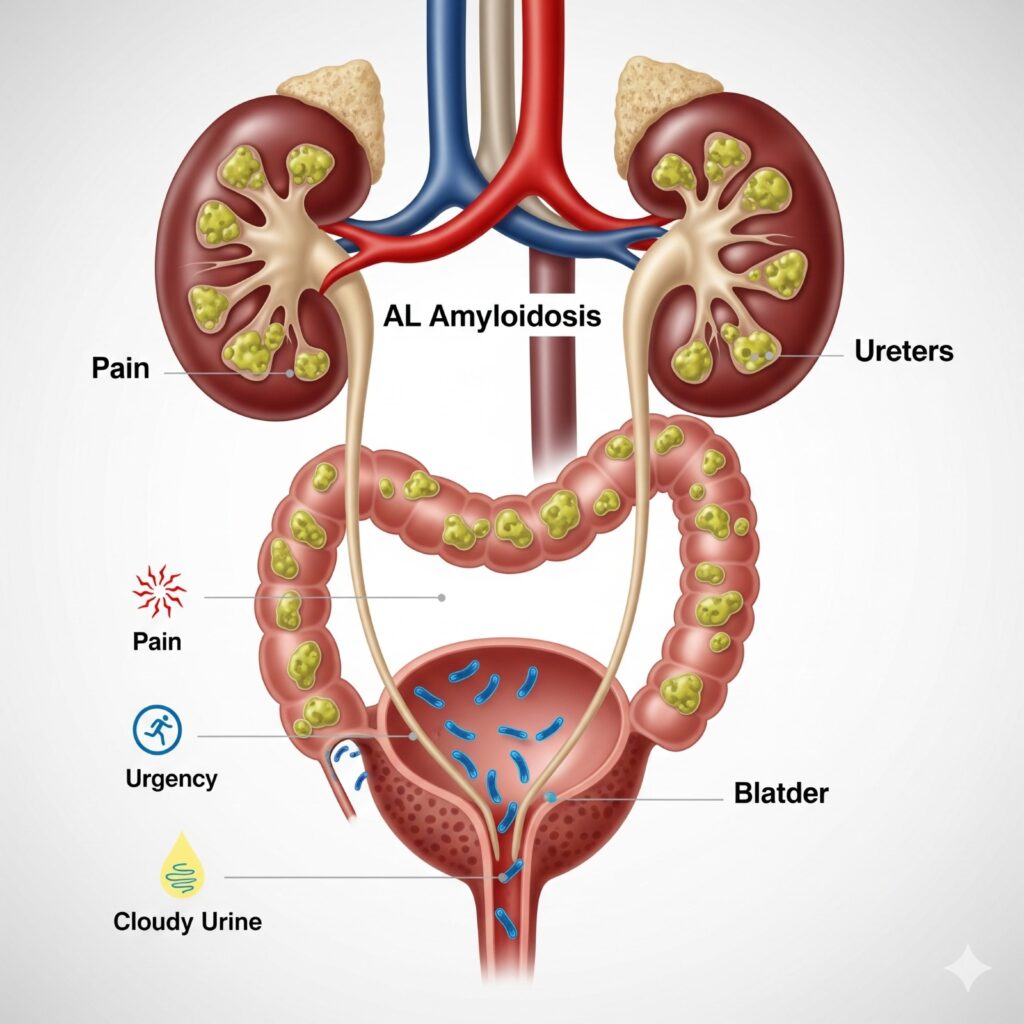
How AL Amyloidosis Impacts the Urinary Tract
The kidneys, ureters, bladder, and urethra that make up the urinary system can be indirectly affected by AL Amyloidosis:
- Kidney Damage: Amyloid build-up in the kidneys can weaken their ability to filter, making it more difficult to remove bacteria from the urinary tract.
- Immune Dysfunction: AL Amyloidosis and its therapies (such as chemotherapy or immunosuppressants) weaken the immune system, which allows infections to develop more easily.
- Hospitalization and Catheterization: Certain patients need urinary catheters or frequent hospitalizations, enhancing UTI risk.
What Are Urinary Tract Infections (UTIs)?
A urinary tract infection results from the entry of bacteria into the urinary system, typically via the urethra, and proliferation in the bladder. Although UTIs affect the general population, AL Amyloidosis patients are more susceptible because of impaired organ function and immune system.
Common Types of UTIs
- Cystitis (Bladder Infection): Inflammation of the bladder, usually due to Escherichia coli.
- Urethritis: Infection of the urethra.
- Pyelonephritis (Kidney Infection): Infection extending to the kidneys, which may be complicated in AL Amyloidosis patients since pre-existing kidney disease is present.
- Asymptomatic Bacteriuria: Bacteria in urine without any symptomatic presentation, seen with increased frequency in immunocompromised patients.
Why AL Amyloidosis Patients Are at Higher Risk of UTIs
1. Kidney Dysfunction
Kidney amyloid deposits can abrogate the filtration of urine, resulting in proteinuria and decreased antimicrobial function in urine, promoting bacterial colonization.
2. Immunosuppressive Treatment
AL Amyloidosis patients are treated with chemotherapy, corticosteroids, or other immunosuppressive treatments in many cases. These treatments suppress immunity and predispose the patient to bacterial infection such as UTIs.
3. Age and Comorbidities
AL Amyloidosis most often occurs in older individuals, who might also have other conditions such as diabetes or cardiovascular disease and therefore are at greater risk of UTIs.
4. Hospitalization and Catheter Use
Recurrent hospital admission, urinary catheters, or invasive procedures may lead to introducing bacteria into the urinary tract.
Common Symptoms of UTIs in AL Amyloidosis Patients
Early identification of UTIs is important in order to prevent complications. Although general UTI presentations are prevalent, AL Amyloidosis patients can present with unusual presentations secondary to kidney involvement or immune suppression.
1. Painful Urination (Dysuria)
- Burning or stinging pain upon urination.
- More prominent in bladder infections (cystitis).
2. Frequent Urination (Urinary Frequency)
- Feeling the need to urinate more frequently than normal.
- Can happen even with the production of small amounts of urine.
3. Sense of Urgency and Incomplete Emptiness
- Sudden need to urinate.
- Not feeling the bladder fully emptied.
4. Cloudy or Offensive Urine
- Urine can be cloudy, dark, or have a bad smell because of bacteria and white blood cells.
5. Blood in the Urine (Hematuria)
- Pink, red, or brown-colored urine can be seen by some patients.
- May be indicative of involvement of bladder or kidneys.
6. Lower Back or Abdominal Pain
- Lower abdominal pain may be caused by bladder infections.
- Flank or back pain might result from kidney infections.
7. Fever and Chills
- Found in more serious infections or in kidney infections.
- Fever might be absent or present in a mild fashion in immunocompromised patients.
8. Fatigue and Malaise
- Overall weakness or tiredness from infection or compromised kidney function.
9. Confusion or Delirium (Particularly in Elderly Patients)
- Confusion in older AL Amyloidosis patients, particularly if fever or infection worsens.
Diagnosis of UTIs in AL Amyloidosis Patients
Accurate diagnosis is essential, especially in patients with renal involvement or immunosuppression.
1. Urinalysis
- Finds white blood cells, red blood cells, bacteria, and protein in the urine.
2. Urine Culture
- Determines the type of bacteria that are causing the infection.
- Assists in selection of antibiotics.
3. Blood Tests
- Monitor kidney function (creatinine, BUN).
- Identify signs of systemic infection or inflammation.
4. Imaging Tests
- Recurrent or complicated UTIs may require ultrasound or CT scan.
- Reveals structural abnormalities or renal damage.
Treatment of UTIs in AL Amyloidosis Patients
Treatment varies with infection severity, kidney function, and overall patient health. Early treatment is crucial to avert complications like sepsis or renal failure.
1. Antibiotic Therapy
- Mild UTIs: Oral antibiotics like trimethoprim-sulfamethoxazole, nitrofurantoin, or cephalosporins.
- Severe UTIs or Pyelonephritis: Intravenous antibiotics might be required.
- Duration can vary depending on kidney function and severity of infection.
2. Symptom Management
- Relief from pain with acetaminophen or nephrotoxic drugs.
- Fluid loading (if not prohibited due to kidney problems).
3. Monitoring Kidney Function
- Continuous evaluation of kidney function is very important for AL Amyloidosis patients.
- Dose modification of antibiotics might be needed.
4. Preventive Measures
- Adequate hygiene and hydration.
- Avoiding unnecessary catheterization.
- Periodic monitoring for asymptomatic bacteriuria in high-risk individuals.
Special Considerations for AL Amyloidosis Patients
1. Proteinuria and Kidney Impairment
- Nephrotic syndrome patients can retain water, making it difficult to treat UTI.
- Some antibiotics need to be dosed cautiously so that they do not cause kidney toxicity.
2. Immunosuppressive Therapy
- Continuous therapy may suppress usual symptoms such as fever.
- Vigilance is essential for the detection of slight changes, such as fatigue or mild urinary changes.
3. Recurrent UTIs
- Recurrent infections are likely in AL Amyloidosis patients.
- Preventive measures involve low-dose prophylactic antibiotics or cranberry supplement (after consulting a physician).
4. Early Intervention
- Treatment delay may cause kidney damage or systemic infections.
- Caregivers must observe for subtle changes such as urine color changes, mild discomfort, or confusion.
Lifestyle and Home Remedies for Prevention
Although medical management is unavoidable, lifestyle modifications can complement urinary tract health:
- Hydrate: Adequate water allows the flushing of bacteria.
- Be Clean: Proper cleansing following urination or defecation.
- Cranberry Preparations: Cranberry possibly inhibits UTI recurrence, as suggested by some studies.
- Avoidance of Irritants: Avoid or restrict caffeine, alcohol, and artificial sweeteners if these exacerbate urinary symptoms.
- Frequent Follow-Up: Frequency of urinalysis for early identification in high-risk patients.
When to Seek Immediate Medical Attention
AL Amyloidosis patients should visit their doctors immediately if they notice:
- Sustained fever, chills, or sweating.
- Severe pain in the back or flanks.
- Hematuria or decrease in urine output.
- Dizziness, confusion, or fainting.
- Recurring or persistent symptoms despite the use of antibiotics.
Prompt treatment is necessary to avoid kidney impairment, sepsis, or hospitalization.
Conclusion
Urinary tract infections are frequent and potentially life-threatening in *AL Amyloidosis patients. Owing to renal involvement, immune suppression, and other illnesses, early detection of *UTI symptoms—such as painful urination, increased frequency of urine, cloudy appearance of urine, lower abdominal pain, fever, and weakness—is crucial. Early diagnosis and correct treatment, along with prevention methods and lifestyle changes, may effectively control UTIs and overall health.
By knowing the risks and symptoms, AL Amyloidosis patients and their caregivers can proactively avoid infections, be alert to early warning signs, and seek medical attention on time. Proper monitoring, hygiene, and follow-through with healthcare professionals are major factors in minimizing complications and achieving the best outcomes.
Urinary tract infections are frequent and potentially life-threatening in *AL Amyloidosis patients. Owing to renal involvement, immune suppression, and other illnesses, early detection of *UTI symptoms—such as painful urination, increased frequency of urine, cloudy appearance of urine, lower abdominal pain, fever, and weakness—is crucial. Early diagnosis and correct treatment, along with prevntion methods and lifestyle changes, may effectively control UTIs and overall health.