Why Veins Swell in Heart Failure:
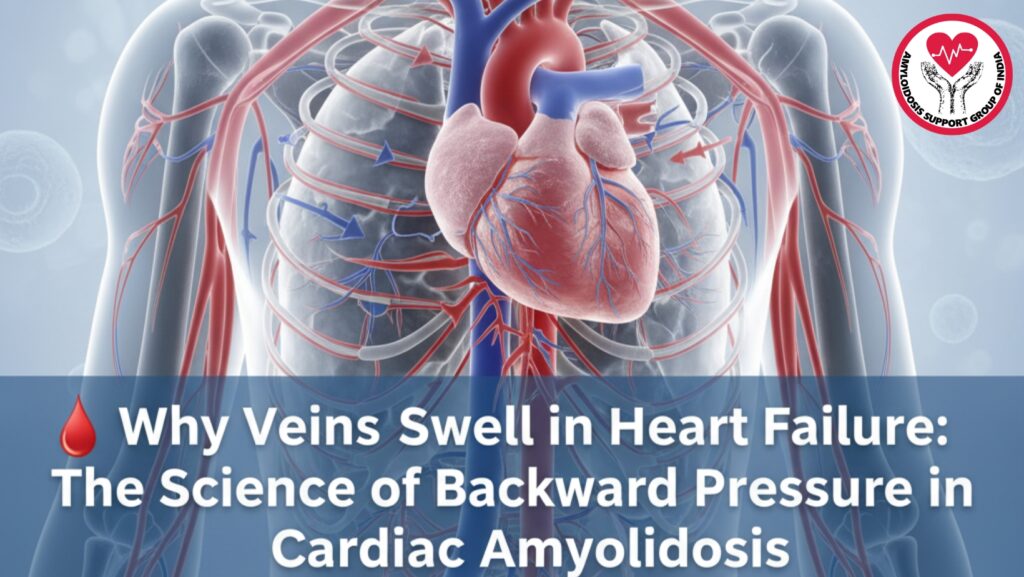
Table of Contents
Introduction: When the Heart Struggles, the Veins Speak
The human heart and venous system work together to ensure that blood flows efficiently through all organs. When this balance is disrupted, particularly due to a weak right side of the heart, the effects are seen in the veins. This backward flow, or increased venous pressure, makes veins look swollen, especially in the neck, chest, and abdomen.
In people with cardiac amyloidosis, this effect is even more noticeable. Sticky amyloid proteins accumulate within the heart’s walls, making them stiff and affecting their ability to relax or contract properly. Over time, this leads to right-sided heart failure, where the heart struggles to pump blood effectively into the lungs, raising pressure throughout the venous system.
This blog explores the mechanism, symptoms, and medical insights related to this condition. It aims to help patients and caregivers understand why veins swell and what it reveals about heart health.
1. Understanding Cardiac Amyloidosis: The Root of the Problem
What Is Cardiac Amyloidosis?
Cardiac amyloidosis is a rare but serious condition resulting from abnormal amyloid protein deposits in the heart tissue. These proteins build up between heart muscle cells, disrupting their normal structure and function.
There are two main types:
- AL (Light-Chain) Amyloidosis: Associated with plasma cell disorders such as multiple myeloma.
- ATTR (Transthyretin) Amyloidosis: Caused by misfolded transthyretin proteins, which can be hereditary or age-related.
When amyloid infiltrates the ventricular walls, it leads to restrictive cardiomyopathy. The heart becomes stiff, struggles to relax, and loses its ability to pump effectively.
2. How Right-Sided Heart Failure Develops
The Role of the Right Heart
The right atrium and right ventricle receive oxygen-poor blood from the body and pump it to the lungs for oxygenation.
When amyloid deposits thicken and stiffen these chambers:
- The right ventricle cannot contract efficiently.
- Blood starts to collect in the right atrium.
- Pressure builds backward into the superior and inferior vena cava, which carry blood from the upper and lower body.
This chain reaction causes what doctors refer to as increased venous pressure.
3. The Science of Backward Pressure: How Veins Swell
Consider a river that meets a dam — water backs up behind it. The same occurs in the venous system when the right heart fails to push blood forward.
Step-by-Step Mechanism:
- Right Ventricular Dysfunction: Amyloid thickens the muscle, impacting contraction.
- Backflow into the Right Atrium: The atrium fills with excess blood, increasing pressure.
- Venous Congestion: This pressure moves backward into the venae cavae and the veins that drain into them.
- Visible Venous Distension: Veins in the neck (jugular), liver (hepatic), and limbs (legs, abdomen) swell as a result.
This sequence is known as systemic venous hypertension, a key indicator of right-sided heart failure.
4. Visual Clues: Where and How Vein Swelling Appears
4.1 Jugular Venous Distension (JVD)
- The most recognizable sign of backward pressure.
- Appears as bulging neck veins, particularly when sitting upright.
- Indicates higher pressure in the right atrium.
4.2 Hepatic Congestion
- The liver becomes filled with blood due to increased hepatic venous pressure.
- Symptoms include tenderness under the right ribs, swelling, and sometimes jaundice.
4.3 Peripheral Edema
- The backward pressure can also cause fluid leakage into tissues, especially in the ankles and legs.
- This results in pitting edema, where pressing on the swollen area leaves an indentation.
4.4 Ascites and Abdominal Fullness
- Blood buildup in the portal venous system leads to fluid accumulation in the abdomen.
- Patients may experience bloating, early satiety, or tightness around the belly.
5. The Link Between Amyloidosis and Heart Failure
In cardiac amyloidosis:
- The heart is both weak and stiff.
- Diastolic function (filling) and systolic function (pumping) are both affected.
- As the disease advances, biventricular failure may develop, though right-sided symptoms usually appear first.
This makes venous congestion one of the earliest and most noticeable signs of the disease.
6. The Physiology Behind Increased Venous Pressure
6.1 Pressure Transmission
When the right atrium is overloaded, the increased pressure spreads backward through:
- Superior vena cava → Jugular veins (neck)
- Inferior vena cava → Hepatic & portal veins (abdomen)
The backward wave of blood pressure is continuous and rhythmic, often visible as venous pulsations.
6.2 Venous Compliance and Resistance
Veins are designed to stretch. However, when pressure stays high over time, they widen and lose elasticity, which can lead to permanent distension in some cases.
7. The Role of Tricuspid Regurgitation
In advanced amyloidosis, the tricuspid valve (between the right atrium and ventricle) often becomes leaky because amyloid stiffens the valve ring. This regurgitation allows blood to flow back into the atrium with each heartbeat, increasing venous pressure and visible pulsations.
In severe cases, as reported in NEJM case studies, pulsations can even show in the forehead veins, demonstrating how far back pressure can travel.
8. Symptoms Patients May Notice
- Swelling in the neck, face, or forehead veins
- Fatigue and shortness of breath
- Abdominal swelling or discomfort
- Swollen ankles or legs
- Feeling of fullness after small meals
- Weight gain from fluid retention
- Dull pain in the right upper quadrant due to liver congestion
9. Diagnostic Evaluation
9.1 Physical Examination
A skilled clinician can identify JVD and measure jugular venous pressure (JVP), a reliable indicator of right atrial pressure.
9.2 Echocardiography
- Reveals thickened ventricular walls with a “sparkling” appearance typical of amyloid.
- Evaluates right ventricular function and the presence of tricuspid regurgitation.
9.3 Cardiac MRI
Provides detailed images of amyloid infiltration and helps differentiate it from other types of heart failure.
9.4 Blood & Urine Tests
Used to find abnormal light chains in AL amyloidosis.
9.5 Right-Heart Catheterization
Directly measures pressures within the heart and confirms elevated right atrial and venous pressures.
10. Treatment: Managing the Backward Flow
While heart failure caused by amyloidosis is challenging to reverse, treatment focuses on relieving symptoms and slowing progression.
10.1 Diuretics
Used to remove excess fluid and ease venous congestion. Caution is needed since excessive use can lower blood pressure and harm kidney function.
10.2 Disease-Modifying Therapies
- For AL Amyloidosis: Chemotherapy or stem cell transplant to decrease light chain production.
- For ATTR Amyloidosis: Medicines like tafamidis, patisiran, or vutrisiran help stabilize or silence transthyretin.
10.3 Supportive Measures
- Low-salt diet
- Elevating legs
- Wearing compression stockings (if tolerated)
- Monitoring daily weight for fluid retention
11. The Importance of Early Detection
Venous swelling is not just a cosmetic issue — it’s a visible warning sign of cardiac stress. Identifying early JVD or leg swelling can encourage prompt evaluation, leading to an earlier diagnosis of amyloidosis and a better outlook.
12. Research Insights and Case Examples
A significant study in The New England Journal of Medicine showed how venous pulsations can extend to the forehead in patients with severe tricuspid regurgitation from amyloidosis. This finding highlights that the body offers visible signs of cardiac strain if both clinicians and patients understand how to recognize them.
New therapies are now not only aimed at treating symptoms but also at stabilizing amyloid deposits and improving diastolic compliance of the heart.
13. Living with Cardiac Amyloidosis
Patients can manage right-sided heart failure more effectively by:
- Following fluid restriction plans.
- Monitoring daily body weight.
- Reporting any new or worsening swelling right away.
- Keeping regular appointments with cardiologists and hematologists.
Support groups and communities, like the Amyloidosis Support Group of India, provide valuable education and emotional support for those affected.
14. The Bigger Picture: What Swelling Really Means
Vein swelling in cardiac amyloidosis signifies more than just fluid buildup — it tells the story of a heart under stress. Each bulging vein represents the struggle of a failing right ventricle, and each pulsation serves as a reminder of the body’s complex balance.
Understanding the science of backward pressure turns what seems like a simple visual sign into a significant indicator of systemic cardiovascular issues.
15. Key Takeaways
- Cardiac amyloidosis makes the heart stiff and weak.
- The right ventricle usually fails first, causing pressure to back up into veins.
- This backward pressure leads to swollen veins, jugular distension, and fluid retention.
- Early recognition of venous congestion can prompt quicker diagnosis and management.
- Modern treatments can slow disease progression and enhance quality of life.
Conclusion: When the Veins Tell a Story
Swollen veins are not just surface signs — they are visible messages from the heart. In cardiac amyloidosis, every bulging neck vein and swollen ankle signals that the right side of the heart is struggling.
By understanding the relationship between right heart failure and venous pressure, we equip patients, caregivers, and clinicians to recognize this early warning sign and respond before further damage occurs.